


Table of Contents
Toggle1.Huawei
In 2019, Huawei’s revenue was US$122 billion, slightly lower than Microsoft’s US$125.8 billion, making it a veritable multinational corporation. However, Huawei’s history is not long. It was established in 1987. In the early years, it relied on switches and routers to develop and grow. In 2011, it set foot in the mobile phone business. And in 2018, mobile phone sales exceeded its traditional communications operator business.
In the past two years, Huawei has been at the center of the game between China and the United States. There have been constant disturbances, and its foreign markets have been blocked, while the domestic market has grown rapidly, showing a trend of surpassing foreign markets.
From the perspective of suppliers, Huawei is undoubtedly a great company. It spends more than US$5 billion (10% of its revenue) on R&D expenses, each year to recruit high-paying talents from top schools around the world and China to ensure its technology to be the leading level in the industry, and maintain a 10% elimination rate of managers at the managerial level every internal assessment, making the team more dynamic. The employee stock ownership model allows Huawei to focus more on products and market demand, because good products bring good market share, and good market returns benefit its employees and shareholders. Huawei has quickly become the industry’s No.1 in the past few decades with its outstanding products and efficient team.
At present, in the field of fiber optic communications, Huawei’s products focus on optical transmission and optical network access equipment.
2.ZTE
Like Huawei, ZTE is also located in Shenzhen, Guangdong, and its business scope basically overlaps. However, unlike Huawei, ZTE is a listed company with state-owned capital holdings. The biggest difference between them is the corporate culture. In Chinese business management courses, both of them are typical cases of corporate culture. Huawei is a wolf and ZTE is a bear. This can also be seen in the response to US sanctions.
ZTE was founded in 1985, and by 2019, ZTE achieved revenue of 13 billion U.S. dollars. The proportions of the company’s three major businesses are:Operator network (54%), terminal (29%), telecommunications (17%).
The gap between ZTE and Huawei in the traditional optical fiber communications industry is not big, but in recent years, Huawei has greatly separated the ZTE by its mobile phone business and 5G business. In the current metropolitan area network and backbone network, the core equipment OLT is basically monopolized by Huawei and ZTE.
In Shenzhen, there are a large number of suppliers of switches, OLTs, ONUs, and transceivers. Most of the suppliers are former foundries of Huawei and ZTE.and then learn their technology, improve, and evolve.and create the factory of themself.
3.Fiberhome
Fiberhome was established in 1999 and is located in the “Optics Valley of China” in Wuhan, which is a core enterprise in Optics Valley. As of 2019, its revenue was 3.5 billion US dollars.
The company’s three major businesses: optical transmission, broadband access, optical fiber and cable. The rapid development of the company has benefited from the popularization and promotion of optical fiber communications in China. In the field of FTTX, Fiberhome has maintained its number one market share position for many years. And in the centralized procurement bidding of China’s three major operators (China Telecom, China Mobile, China Unicom), Fiberhome can win the top three bidding shares.
Relying on the huge demand in the Chinese market, Fiberhome has grown rapidly and has become one of the top 500 Chinese companies.
4.Walsun
Shenzhen Walsun Optics Technology Co., Ltd. (hereinafter referred to as “Walsun”) was established in 2013,focusing on the design and development of high-speed optical transceiver, is a professional manufacturer of high-end integrated solutions for optical communications. We can also provide customized product and service to meet the special requirements of our customers.
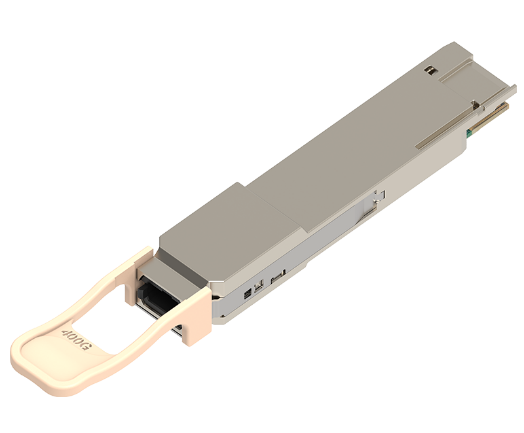
Walsun mainly focuses on the development and manufacture of 800G OSFP,400G QSFP-DD,200G QSFP56,200G QSFP-DD,200G/100G CFP2,QSFP28 PAM4,100G QSFP28,50G QSFP28 PAM4,40G QSFP+,25G BIDI/CWDM/DWDM/MWDM/LWDM,10G SFP+/XFP DWDM/CWDM/BIDI,SFP DWDM/CWDM/BIDI series optical transceiver.The products are used in transmission,datacom,storage,energy and subsystem,etc.environmental applications.
5. Futong Group
Type of Business: Fiber Optic Cable Manufacturer, Optical Fiber Supplier
Headquarters: No.1-8, Jinqiu Ave., Fuyang District, Hangzhou, Zhejiang, China
Year Established: 1987
Main Markets: Worldwide
Main Products: Optical Fiber Cable, Optical Fiber
Futong Group is a China-based leading manufacturer of optical cables and supplier of fiber solutions with 36 years of experience. Their main products include optical fiber cables, optical fiber preform and optical fibers, which are widely used in the optical communication industry.
Futong Group has obtained the ISO9001 quality management system certificate and manages the organization and production process according to standards, ensuring the stability and excellence of product quality.
Conclusion
In conclusion, the optical transceiver market is projected to see significant growth in the coming years,driven by factors such as the increasing usage of smartdevices and data trafic, rising demand for cloud-based services, the need for smalland energy-efficient transceivers, and the growth of mega data centers.
The market is also expected to benefit from the development of compact form factors and Ethernet based optical ransceivers with a wide range oftransmission speeds. As companies continue to focus on R&D, the market is expected to witness increased growth potential, especially in the Asia Pacificregion,with its increasing connectivity and adoption of high bandwidth-intensive applications. With a projected compound annual growth rate of 15.2%,theoptical transceiver market presents siqnificant opportunities for growth and innovation in the years to come.
In the fierce market competition, who do you think wil be the future next top 10 optical transceiver manufacturer? Let’s wait and see.