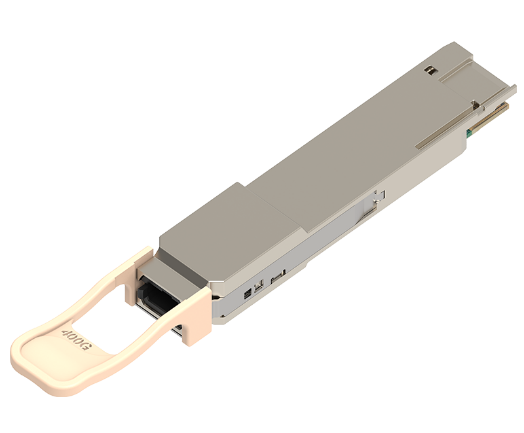



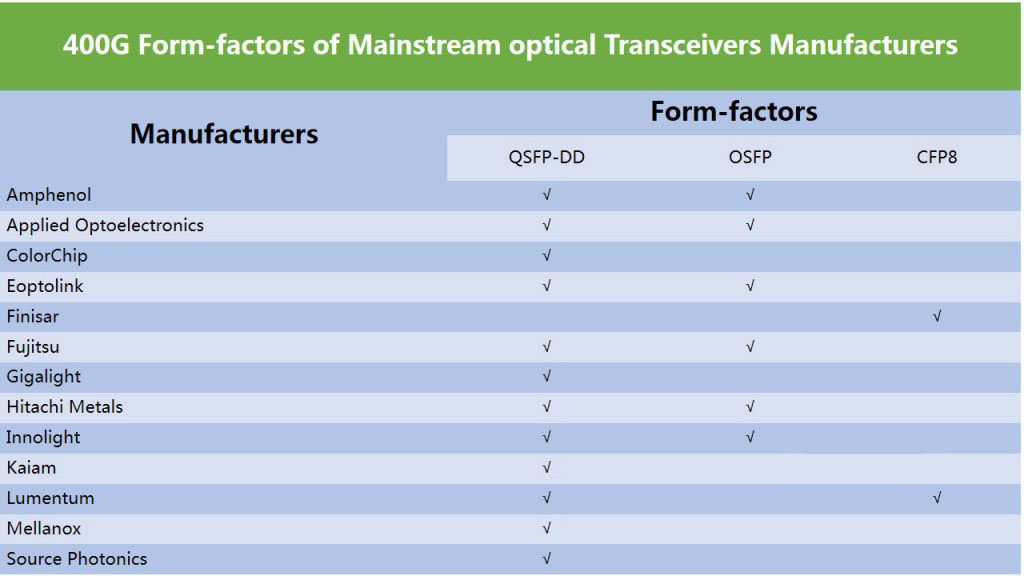
As we entered 2019, 400G became a hot topic in the optical communication industry, with several leading global optical module manufacturers launching their own 400G optical modules. When we list the packaging of these manufacturers’ 400G optical modules (as shown in the figure below), we find that except for Finisar, which was acquired, all other manufacturers adopted QSFP-DD packaging—indicating that the market seems to have recognized QSFP-DD as the preferred packaging for 400G optical modules. Some manufacturers also introduced OSFP and CFP8 packaging for 400G optical modules.
Why did mainstream manufacturers choose QSFP-DD packaging? Does this imply that QSFP-DD will dominate as the main 400G optical module packaging in the future? To clarify these questions, let’s first look at the development history of QSFP-DD.
Development History of QSFP-DD Packaging
- March 21, 2016: QSFP-DD MSA Group initiated the development plan for QSFP-DD high-speed interfaces.
- September 19, 2016: QSFP-DD MSA Group released the initial draft (Version 1.0) of QSFP-DD hardware specifications, including diagrams.
- March 13, 2017: QSFP-DD MSA Group released Version 2.0 of the QSFP-DD hardware specifications and the QSFP-DD White Paper.
- September 19, 2017: QSFP-DD MSA Group released Version 3.0 of the QSFP-DD hardware specifications and simultaneously announced the specifications for the CS connector (a new type of connector for QSFP-DD interfaces).
- March 13, 2018: QSFP-DD MSA Group released the QSFP-DD Thermal Design White Paper, addressing thermal performance evaluation for QSFP-DD modules in high-performance data center environments.
- August 30, 2018: QSFP-DD MSA Group announced the successful interoperability testing of QSFP-DD packaging, marking the official deployment readiness of QSFP-DD packaged optical modules.
- September 18, 2018: QSFP-DD MSA Group released Version 4.0 of the QSFP-DD hardware specifications (latest version) and Version 3.0 of the 8/16 Channel Pluggable Optical Module Common Management Interface Specification. By this time, the QSFP-DD MSA had matured considerably, and leading optical module manufacturers had launched their QSFP-DD optical modules. For example, Gigalight, a global leader in optical interconnect design innovation, introduced a 200G optical interconnect solution for large-scale data centers transitioning from 100G to 400G—a 200G QSFP-DD SR8 optical module and a series of 200G QSFP-DD active optical cables.
Summary:
From early 2016 to the end of 2018, the birth and maturation of QSFP-DD took nearly three years. During this period, the number of promoters in the QSFP-DD MSA Group increased from the initial 13 to the current 14 (as three companies were acquired, effectively leaving 11). The changes in promoters during this period also verify an old saying: “The times create heroes.”
II-VI acquired the veteran optical module manufacturer Finisar (Finisar);
Broadcom acquired Brocade;
Lumentum acquired Oclaro;
Cisco also completed the acquisition of Luxtera.
After so many acquisitions, let’s take a look at the remaining giants. Among them are Broadcom (formerly Avago after acquiring Broadcom), equipment giants Cisco and Huawei, component giants Lumentum, as well as well-known optical module manufacturers Foxconn Interconnect Technology, well-known accessory suppliers Molex and TE Connectivity, covering the entire communications industry. Why are so many giants jointly promoting QSFP-DD packaging? Let’s analyze the reasons below.
Why Adopt QSFP-DD Packaging?
A good packaging must first support transmission media and optical module types widely used in the network industry. Transmission media include passive direct-attached copper cables (DACs), multimode fiber (MMF), and single-mode fiber (SMF). Optical modules and active copper cables or active optical cables also include 100Gb/s, 200Gb/s, and 400Gb/s series defined by Ethernet, Fiber Channel, and InfiniBand standards. Secondly, the port density of the new packaging must be consistent with the networks already deployed. Finally, backward compatibility with the widely used QSFP packaging is crucial for industry adoption. QSFP-DD is a packaging that meets all these conditions.
QSFP-DD, short for Quad Small Form Factor Pluggable Double Density, is a new module and cage/connector system similar to the current QSFP but with an additional row of contacts, providing an eight-channel electrical interface. Compared to the conventional QSFP28 module, the QSFP-DD module doubles the number of high-speed electrical interfaces supported, hence the “double density” in its full name. QSFP-DD supports the 50Gb/s PAM4 electrical modulation format, increasing port speeds by four times compared to QSFP28 modules. Next, let’s analyze the features of QSFP-DD one by one.
Features and Benefits of QSFP-DD
- It expands on QSFP (a widely adopted four-channel electrical interface packaging, including QSFP+ and QSFP28).
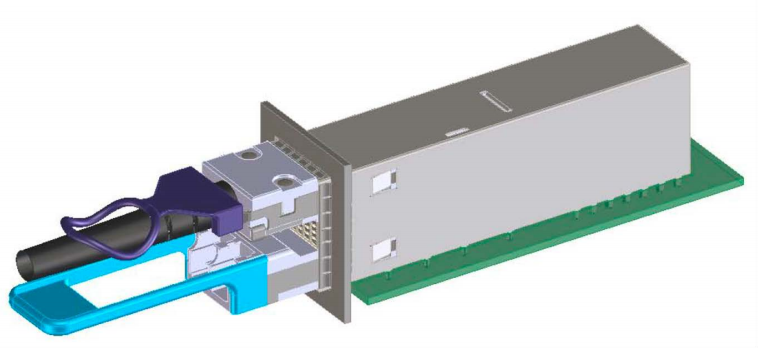
- It utilizes a 2×1 stacked integrated cage and connector. Typically, most pluggable packaging designs will eventually develop a dual-high stacked cage connector system in addition to the single-high cage connector system included in the initial MSA specification, left to independent suppliers. For better industry service, the QSFP-DD MSA Group chose to develop both single-high and dual-high stacked cage connector systems simultaneously.
- QSFP-DD uses SMT (Surface-Mount Technology) connectors and a 1xN holder, with cage design optimization and module shell optimization achieving a thermal capacity of at least 12 watts per module. The QSFP-DD specification defines thermal capacity levels of up to 14 watts and above. Due to innovative thermal management technologies in module and holder designs, QSFP-DD modules support at least 12 watts of thermal capacity in typical system designs, benefiting from the rich knowledge and experience of QSFP series packaging system designs. Higher thermal capacity reduces the module’s requirements for heat dissipation, thus avoiding unnecessary costs.
- It uses an 8-channel electrical interface. QSFP-DD’s electrical interface uses eight channels, with each channel supporting speeds of up to 25Gb/s (NRZ modulation) or 50Gb/s (PAM4 modulation), providing solutions with aggregated bandwidths of up to 200Gb/s or 400Gb/s. QSFP-DD can achieve aggregated switch bandwidths of up to 14.4Tb/s in a single slot, quadrupling the aggregated switch bandwidth while maintaining port density. This allows QSFP-DD to support the increasing network bandwidth demands and data center traffic growth.
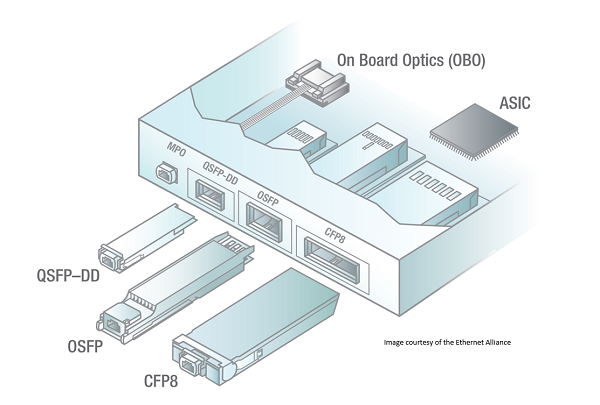
Before QSFP-DD appeared, the most popular interfaces were typically single-channel (SFP and SFP+) or four-channel (QSFP+ and QSFP28). To meet anticipated demands for data bandwidth or channel capacity, industry organizations defined an eight-channel interface. However, available packaging supporting the eight-channel interface at that time lacked the expected features or density for next-generation systems. Therefore, the QSFP-DD MSA Group expanded and defined QSFP-DD based on QSFP (QSFP+ and QSFP28). So, what did QSFP-DD extend compared to QSFP?
QSFP-DD vs. QSFP (QSFP+/QSFP28)
- QSFP-DD’s bandwidth can be up to ten times that of QSFP+ or four times that of QSFP28. QSFP has four electrical channels, each channel operating at speeds of 10Gb/s (QSFP+) or 25Gb/s (QSFP28), providing aggregated solutions of 40Gb/s or 100Gb/s. In contrast, QSFP-DD’s pluggable packaging electrical interface uses eight channels, each channel operating at speeds of up to 25Gb/s (NRZ modulation) or 50Gb/s (PAM4 modulation), offering solutions with aggregated speeds of up to 200Gb/s or 400Gb/s.
- QSFP-DD is backward compatible with QSFP+/QSFP28. Systems designed using QSFP-DD modules are backward compatible, supporting existing QSFP+/QSFP28 modules, providing flexibility for end users and system designers. Backward compatibility is crucial for the industry—since ASIC designs support multiple interface speeds, systems need to fully utilize this capability. End users can leverage newer ASICs and system products, reducing port costs, and can insert various currently available QSFP+/QSFP28 modules to support their required media and transmission distances without requiring separate system products. This significantly reduces the deployment risk of new equipment, while system designers can build universal products that support multiple pluggable variants using known technologies and designs. Module designers do not need to port their low-rate designs to new, non-backward-compatible packages, reducing overall costs. Backward compatibility can save costs on device-scale deployment, making it very important.
- QSFP-DD and QSFP+/QSFP28 have the same system port density. However, since each QSFP-DD port can accommodate eight channels instead of four, QSFP-DD increases the number of ASIC ports supported by existing interfaces (such as CAUI-4) by a factor of two.
- The mechanical interface on the motherboard for QSFP-DD is slightly deeper than QSFP+/QSFP28, to accommodate an additional row of contacts.