



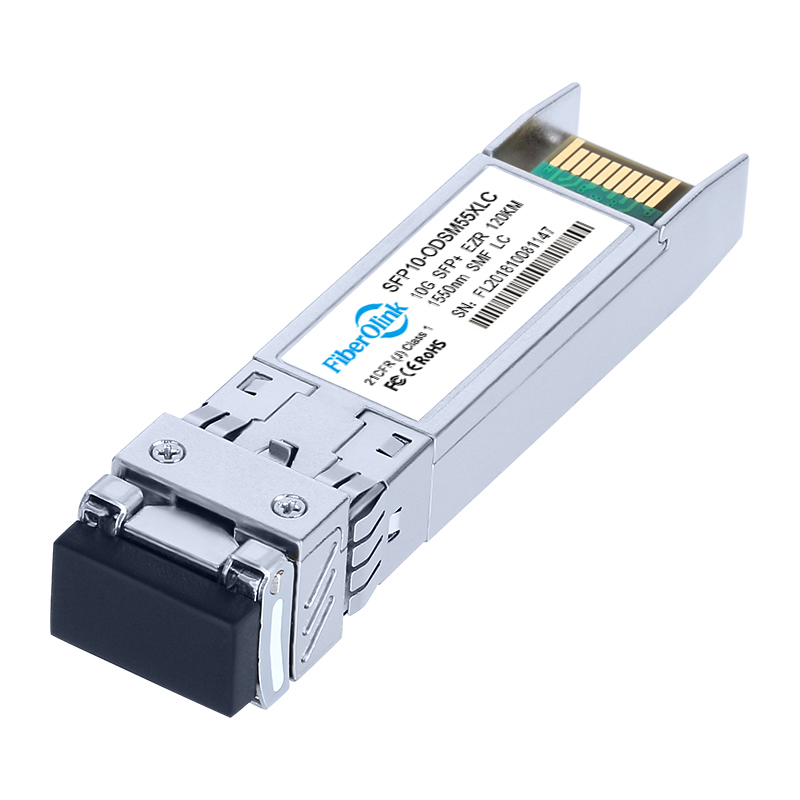
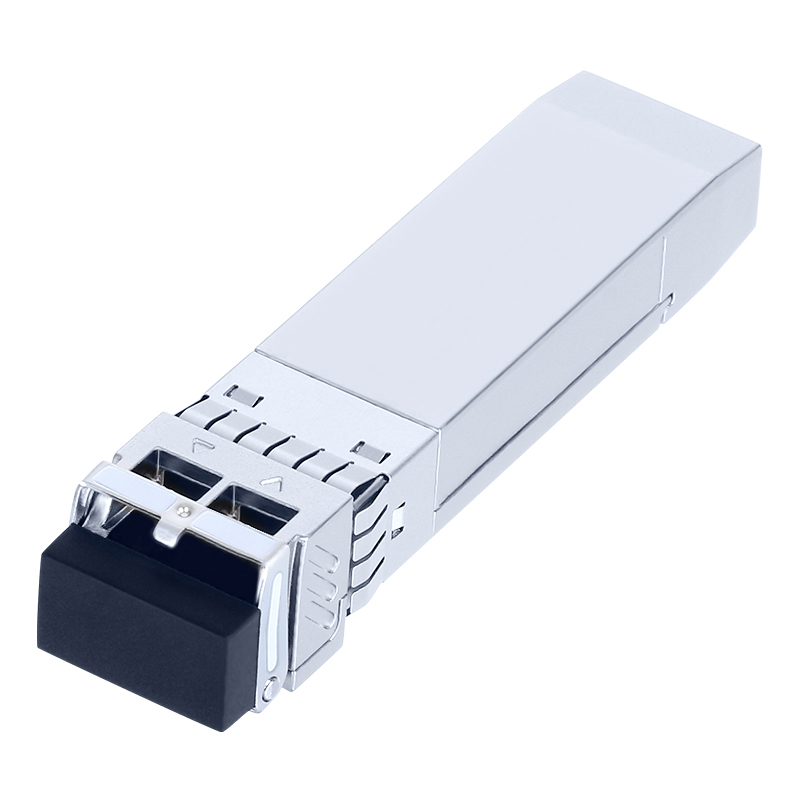
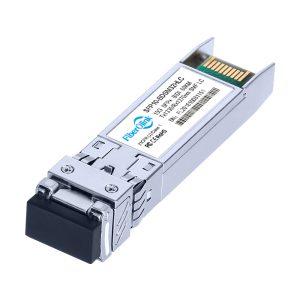
10G SFP+ ZR++ 1550nm 120km
- Adopts hot-swappable SFP+ packaging
- Full-duplex transceiver module
- 1550nm EML transmitter and APD receiver
- Compliant with IEEE 802.3ae, SFF-8472, SFF-8431, SFF-8432, and SFP+ MSA Ethernet standards
- Maximum power consumption less than 1.6W
- Built-in Digital Diagnostic Monitoring (DDM)
- Power supply voltage 3.3V
- RoHS compliant (lead-free)
- Class 1/1M product, compliant with IEC60825-1 requirements
- Meets Telcordia (Bellcore) GR-468-CORE reliability requirements
- Meets EMI and ESD requirements
Warranty : 30-Day Free Return, 3-Year Free Replacement, 5-Year Warranty, Lifetime After-sales Technical Support.
| Product Model | SFP-10G-ZR-120 | Vendor Name | Fiberolink |
| Form Factor | SFP+ | Data Rate | 10.3125Gbps |
| Wavelength | 1550nm | Distance | 100km |
| Connector | LC Duplex | Cable Type | SMF |
| Transmitter Type | EML | Receiver Sensitivity | APD |
| TX Power | 1~5dBm | Receiver Sensitivity | < -24.5dBm |
| Power Consumption | <1.6W | Operation Temperature | 0~70°C |
| DDM | Support | EMC | Support |
| Protocols | SFP+ MSA, CPRI, eCPRI | ||
Q: What are the differences between 10G DAC high-speed cables, 10GBase-T (Ethernet) modules, and 10G SFP+ (optical) modules?
A: While all three—10G DAC high-speed cables, 10GBase-T modules, and 10G SFP+ modules—operate at the same transmission speed, they differ in several aspects:
Backward Compatibility: 10G DAC high-speed cables do not support backward compatibility with Gigabit switches, being designed exclusively for connections between 10 Gigabit Ethernet switches. Conversely, 10GBase-T modules are compatible with standard copper networking devices.
Latency: As mentioned previously, 10GBase-T modules have a latency of approximately 2.6 microseconds, whereas 10G SFP+ optical modules exhibit a latency of around 300 nanoseconds. 10G DAC cables offer latency within this range, around 0.3 to 1.8 microseconds, which is lower than that of 10GBase-T modules.
Transmission Distance: Compared to 10GBase-T modules, 10G DAC high-speed cables have a much shorter maximum transmission distance of only 10 meters. This limitation significantly curbs power consumption and latency, making them ideal for intra-rack and inter-rack wiring connections.
Cable Types: 10G DAC high-speed cables incorporate twisted pair conductors for signal transmission. In contrast, 10GBase-T modules use Ethernet cables, and 10G SFP+ modules employ fiber optic cables.
Cost: Although 10GBase-T modules, which typically leverage inexpensive Ethernet cabling, are less costly than 10G SFP+ optical modules, it’s important to note that the prices of single-mode and multi-mode 10G SFP+ modules vary based on wavelength and transmission distance. For instance, industrial-grade 10GBase-T modules can be more expensive than their optical counterparts. However, 10G DAC high-speed cables are generally the more affordable option; for example, FiberStore (FS) offers a 1-meter 10G DAC cable starting at 81 yuan, whereas a 10GBase-T module costs at least 480 yuan.
Q: What is the interface type for 10G SFP+ optical modules?
A: 10G SFP+ optical modules adopt the LC interface, a compact fiber optic connector compatible with both single-mode and multi-mode fiber.
Q: How does a 10G SFP+ optical module ensure compatibility with different devices?
A: Compliant with industry standards such as IEEE 802.3ae and SFF-8431, 10G SFP+ modules facilitate interoperability across devices from various manufacturers. Nevertheless, checking the device compatibility list before usage is advisable.
Q: What are the digital diagnostic features of 10G SFP+ optical modules?
A: Equipped with DDM (Digital Diagnostics Monitoring), SFP+ modules enable real-time monitoring of temperature, voltage, transmitted and received optical power, facilitating fault detection and maintenance.
Related products
-
 Optical Transceivers
10G BIDI SFP+ ZR+ 1490Tx 1550Rx 100km
-
 Optical Transceivers
10G CWDM SFP+ ER 40km
-
 10G SFP+ BiDi
10G BIDI SFP+ 1270Tx 1330Rx 60km
-
 Optical Transceivers
10G SFP+ ER 1550nm 40km