



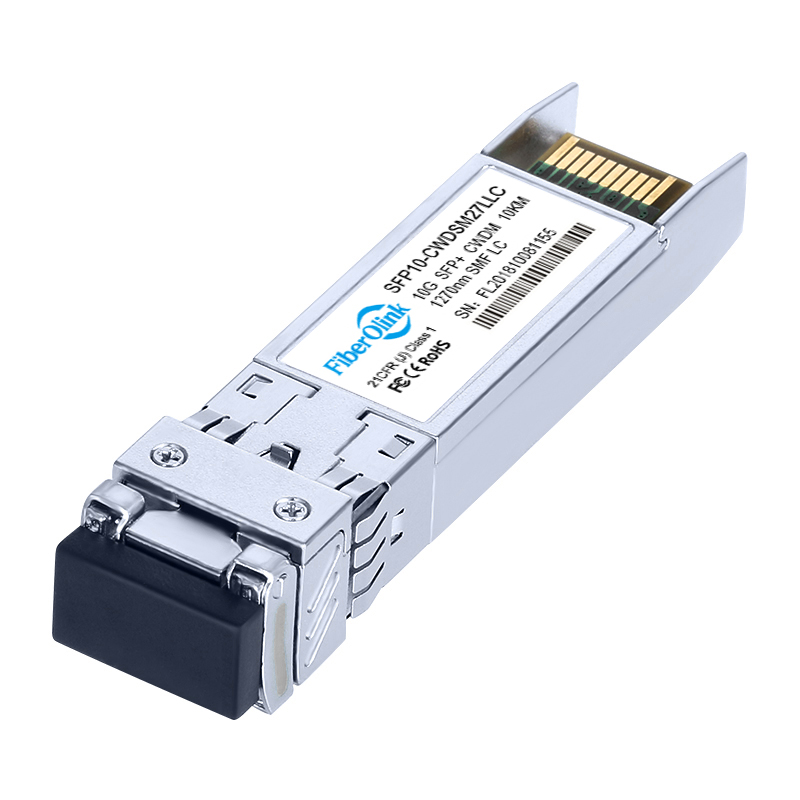
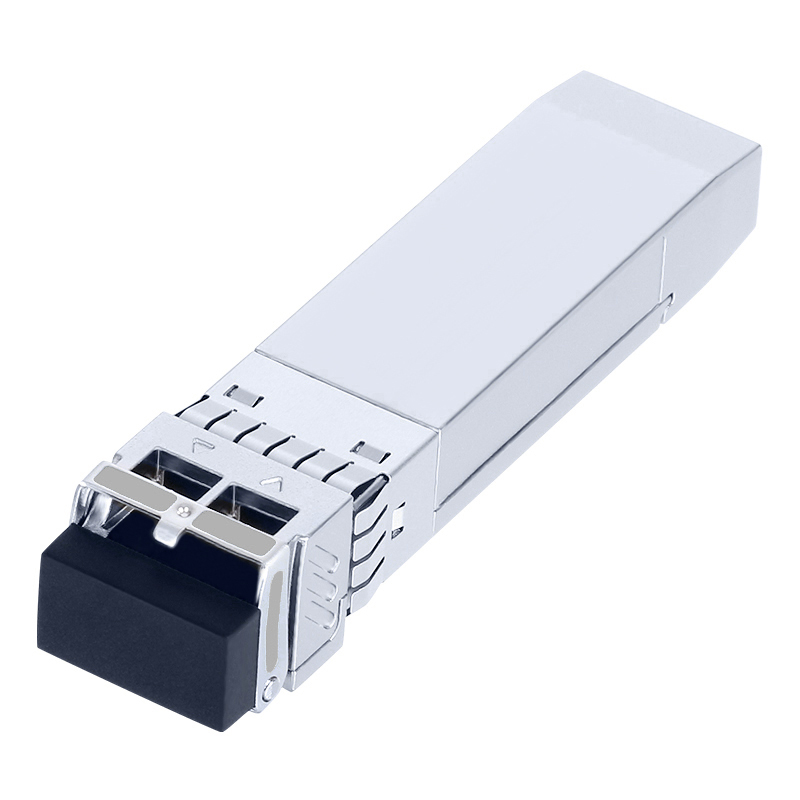
10G SFP+ CWDM LR 10km
- Utilizes hot-swappable SFP+ package full-duplex transceiver module
- CWDM DFB transmitter and PIN receiver
- Compliant with IEEE 802.3ae, SFF-8472, SFF-8431, and SFP+ MSA Ethernet standards
- Maximum power consumption less than 1.5W
- Built-in Digital Diagnostic Monitoring (DDM)
- Power supply voltage 3.3V
- Compliant with RoHS environmental standards (lead-free)
- Class 1/1M specification products, compliant with IEC60825-1 requirements
- Meets Telcordia (Bellcore) GR-468-CORE reliability requirements
- Meets EMI and ESD requirements
Warranty : 30-Day Free Return, 3-Year Free Replacement, 5-Year Warranty, Lifetime After-sales Technical Support.
| Product Model | SFP-10G-CWDM-10 | Vendor Name | Fiberolink |
| Form Factor | SFP+ | Data Rate | 10.3125Gbps |
| Wavelength | TX-1270nm/RX-1610nm | Distance | 10km |
| Connector | LC Duplex | Cable Type | SMF |
| Transmitter Type | DFB | Detector Types | PIN |
| TX Power | -6~-0.5dBm | Receiver Sensitivity | < -14.4dBm |
| Power Consumption | ≤1.5W | Operation Temperature | 0~70°C |
| DDM | Support | EMC | Support |
| Protocols | IEEE 802.3ae, SFF-8472, SFP+ MSA, CPRI, eCPRI | ||
Q、How to use SFP+ optical modules with switches
A、Different types of optical modules, when connected to switches, can be applied in various networking scenarios. Below are several practical application configurations for SFP+ optical modules with switches.
- Connection between 10G SFP+ Ethernet Optical Modules and Switches
Insert four pieces of 10G SFP+ optical modules into the 10-Gbps SFP+ ports of one switch, then plug a 40G QSFP+ optical module into the 40-Gbps QSFP+ port of another switch. Finally, connect the two switches using a break-out fiber patch cable.
This setup primarily realizes the expansion from 10G to 40G networks, quickly and easily meeting the needs of data center network upgrades.
- Connection between BIDI SFP+ Single-Fiber Bidirectional Optical Modules and Switches
Plug the optical modules into the SFP+ ports of two switches, respectively, and then use LC fiber patch cables that match the module connectors to connect the optical modules on both switches.
This connection method efficiently implements a simple and cost-effective data link, applicable to Ethernet connections in data centers, enterprise cabling, and telecom operations.
- Connection between CWDM SFP+ Ethernet Optical Modules and Switches
This configuration employs intermediate boxes, fiber transceivers, and CWDM coarse wave division multiplexers to connect the optical modules with switches, achieving the conversion of RJ45 electrical interfaces on 10G Ethernet switches to CWDM wavelengths required by CWDM multiplexers.
- Connection between DWDM SFP+ Ethernet Optical Modules and Switches
Insert the optical module into the SFP+ port of the switch and then connect it to a DWDM dense wave division multiplexer using armored fiber patch cables.
This configuration ensures protection of optical signals during long-haul transmissions, minimizing optical wave loss and making it suitable for long-distance optical signal transmission.
Q、What is the difference between Cisco SFP-10G-SR and SFP-10G-SR-S?
A、Aside from the SFP-10G-SR-S not supporting FCoE, all technical specifications are identical.
Q、Where can I find the Cisco SFP-10G-SR compatibility matrix?
A、Please refer to the Cisco Compatibility Matrix. However, if you have any questions about the compatibility of our products, feel free to contact us!
Related products
-
 Optical Transceivers
10G SFP+ ZR++ 1550nm 120km
-
 Optical Transceivers
10G BIDI SFP+ ZR+ 1550Tx 1490Rx 100km
-
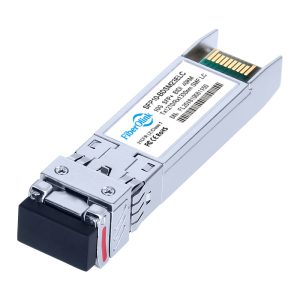 10G SFP+ BiDi
10G BIDI SFP+ ER 1270Tx 1330Rx 40km
-
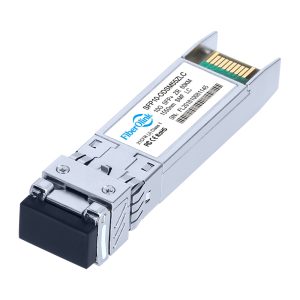 Optical Transceivers
10G BIDI SFP+ ZR 1490Tx 1550Rx 80km