


Aerial fiber optic cables are commonly used in optical communications and are now so common that they can be seen on utility poles all around you. Because aerial cables are exposed to harsh outdoor environments and extreme weather conditions, their materials must be strong and durable. Aerial cables come in a variety of designs to suit different types of overhead applications. Today, we’ll learn more about aerial fiber optic cables, how they work, and installation tips.
How to Classify Aerial Fiber Optic Cable?
Aerial optical cables can be divided into two categories: self-supporting and Catenary. The choice of these two types depends on the installation location.
If we want to install the fiber optic cable on a path that already has support and don’t have to worry about the span of the fiber optic cable, then we can use the suspension cable and fix it to the existing messenger wire.
If there is no existing messenger line at the installation site, we can choose a self-supporting aerial fiber optic cable. As the name suggests, the structure of this fiber optic cable allows us to span long distances simply by fixing it to a utility pole.
In the self-supporting category, there are three different types of aerial cables:
ADSS (All Dielectric Self-Supporting Cable): This is a very strong cable that can support its own weight. It can lay distances of up to 1000m between support poles with considerable extension.
The optical fibers in this aerial optical cable are completely loosely distributed in the cable core to prevent attenuation caused by the deformation of the optical cable. They are standard on power transmission lines.
Figure 8: This self-supporting fiber optic cable gets its name from the strength elements located on the outside of the cable and cuts to form the number 8. This strength member can be made of steel or insulating material. This aerial fiber optic cable can withstand very high tensile forces up to a length of 180 meters. Figure 8 cables can be divided into three types, but all three types have high mechanical strength, water resistance, and high UV resistance:
- GYTC8S Type: Fibers are protected in corrugated steel pipes with high mechanical strength.
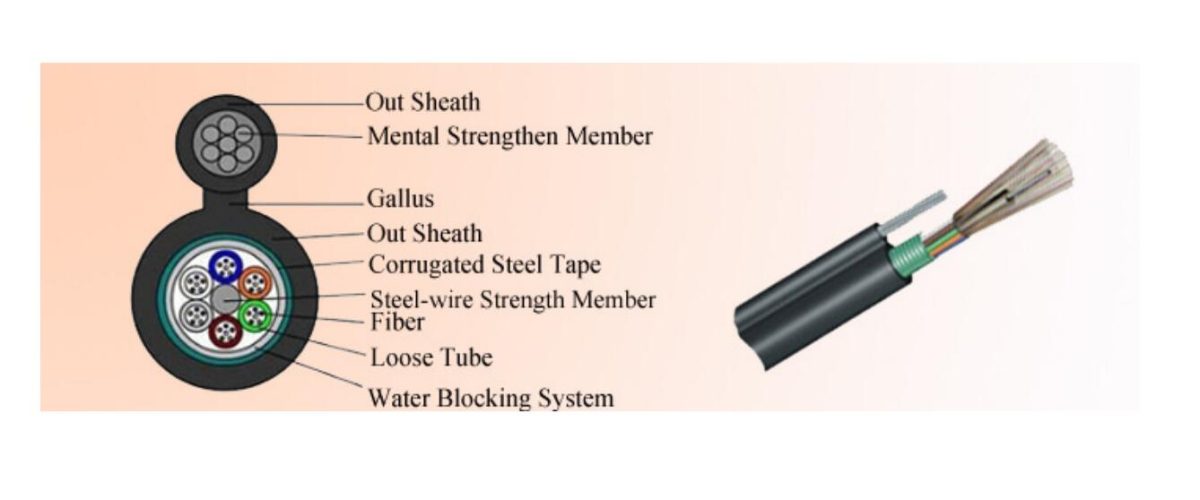
- GYXTC8Y Type: It has a loose tube that is water-blocking and waterproof.
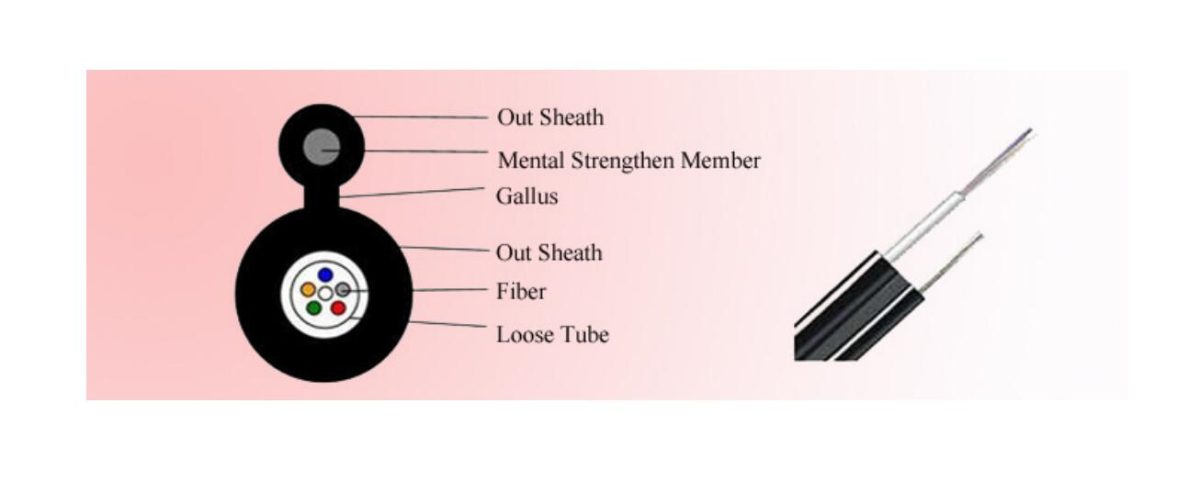
- GYXTC8S Type: The optical fiber is protected in a corrugated steel tube with high mechanical strength, and it also has a loose tube with water-repelling and waterproof properties.
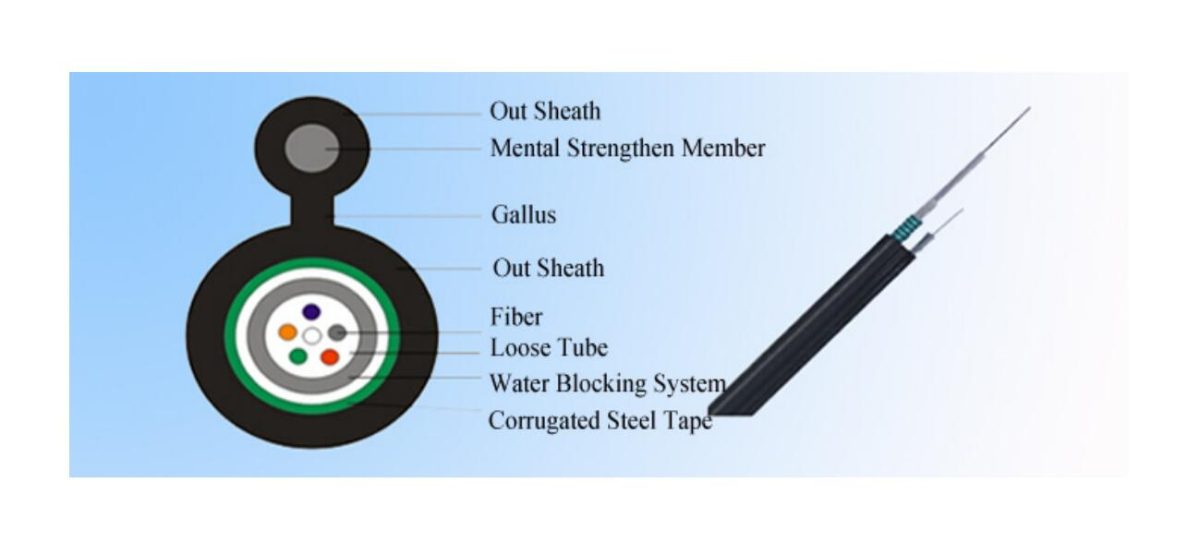
- OPGW (Optical Ground Wire): This is an all-metal cable that holds a large number of optical fibers inside. These overhead cables are used in power lines to both transmit data and protect against lightning strikes.
What Are the Main Advantages of Aerial Fiber Cable?
The main advantages of aerial fiber optic cables are:
Since it is very light and flexible (except for the OPGW fiber optic cable), it can be easily installed.
Often, utility poles or other network poles already exist along the paths we wish to lay, and we can take advantage of these existing paths.
Aerial fiber optic cables can cover long distances quickly, sometimes in just a day’s work.
However, aerial cables also have disadvantages such as visual pollution to the landscape, increased exposure risk due to exposure (some cables can be shot with a shotgun), and exposure to the environment, requiring more maintenance on these cables.
Aerial Optical Cable Installation Skills
When installing aerial fiber optic cables, there are usually two methods: tying the fiber optic cable to a steel messenger or directly installing a self-supporting figure-8 aerial fiber optic cable.
For better aerial optical cable installation, there are some tips.
- Clarify the Problems That May be Encountered During the Installation Process
The following three points are the most common problems:
Dead-End Pole: A dead-end pole is a utility pole on which a self-supporting figure-of-eight aerial cable or steel courier is tensioned and terminated in a dead-end fixture.
Messenger Span: Courier span is the length of a continuous steel courier tensioned between two dead-end utility poles.
Intermediate poles: Intermediate poles are all poles between the two end poles.
- A perfect Planning Solution is Necessary Before Any Aerial Cable Installations:
Preparations: A cable route survey should cover all necessary areas, including utilities, streets, etc. In addition, approval from all relevant parties should be obtained. During the route survey, it should be verified that there is sufficient clearance along the route of the new cable. Utilize existing utility poles as much as possible to save costs and shorten construction time. Due to the characteristics of the optical cable, the optical cable should occupy the uppermost communication space on the utility pole. Sufficient clearance must be maintained between optical and power cables on commonly used utility poles. During this process, you will need to refer to the current National Electrical Safety Code to determine proper clearances. You must evaluate existing dead-end utility poles to see if they can withstand the stress of the overhead cable installation. You must evaluate the need for temporary supports to relieve temporary unbalanced loads during cable installation. The location of the splices is chosen to maximize the continuous span of the cable and minimize the number of splices. In addition, it should be easily accessible to oncoming vehicles. This process is usually confirmed during a cable route survey. Never perform overhead installations in wet environments. Additionally, all personnel must be properly trained for pole work to ensure safety. They should be properly grounded when installing optical cables (including fully insulated optical cables) near high-voltage power cables.
- Safety During Installation:
To minimize the risk of accidents in the work area, observe existing regulations for installing warning signs, barricades, manhole guards, and cones. Before pulling the cable directly from the “figure-8” configuration, ensure that the area inside the cable (“figure-8”) loop is clear of personnel and equipment. Failure to do so may result in personal injury or damage to the cable. Make sure the tools and equipment used to install the cables are in working order. Improperly functioning equipment could damage cables or cause personal injury. Use caution when working near electrical hazards if wires run through or near a right-of-way where installations are in progress. Joins together all metal components in the underground system. At all points where anyone may come into contact with metal parts of the underground cable system, ground the bonded metal parts to a suitable ground to avoid electrical hazards from wires or other means.