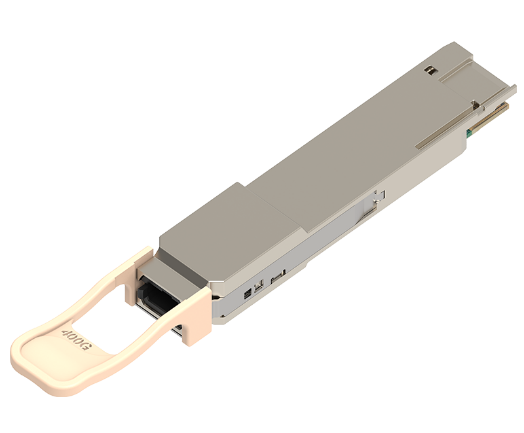



Brocade 100G-QSFP28-CWDM4-2KM Compatible 100G QSFP28 CWDM4 1310nm 2km LC SMF DDM Transceiver Module
Table of Contents
ToggleProduct Details
| Brocade Compatible | 100G-QSFP28-CWDM4-2KM | Vendor Name | Walsun |
| Form Factor | QSFP28 | Max Data Rate | 103.1Gbps |
| Wavelength | 1271nm, 1291nm 1311nm, 1331nm |
Max Distance | 2km |
| Connector | Duplex LC | Transmitter Type | CWDM DFB |
| Cable Type | SMF | Receiver Type | PIN |
| TX Power | -6.5~+2.5dBm | Receiver Sensitivity | < -11.5dBm |
| Protocols | 100G Ethernet, MSA Compliant | Operation Temperature | 0 to 70°C (32 to 158°F) |
Q: How to Select the Best 100G QSFP28 Optics?
A: Now that we know we have to choose the best 100G optics based on our actual demand, but how? How can we choose the right one? Here is a selection guide for you.
For transmission distances between 5m and 100m, you can choose the QSFP28 SR4 optical transceiver module. It can transmit 70m using OM3 fibers or 100m using OM4 fibers.
For transmission distances between 100m to 2km, QSFP 100G PSM4 or QSFP28 CWDM4 modules would be better. The cost of QSFP28 CWDM4 is much higher than the QSFP28 PSM4. However, the QSFP28 CWDM4 requires only two single mode fibers in two-way transmission which is much less than the eight single mode fibers of QSFP28 PSM4, and the total cost of the QSFP 100G PSM4 rises very quickly. In practical applications, it is necessary to decide whether to use QSFP28 PSM4 or QSFP28 CWDM4 depending on the interconnection distance.
For transmission distance between 10km to 40km, you can consider QSFP 100G LR4 which has a maximum transmission distance of up to 10 km, or QSFP28 ER4 transceivers which can reach up to a maximum transmission distance of even further-40km.
Q: QSFP28 vs QSFP+ vs 100G CFP vs QSFP-DD: What are the differences?
A: The main differences between the four types of transceivers are shown below:
| Form Factor | QSFP28 | QSFP+ | 100G CFP | QSFP-DD |
|---|---|---|---|---|
| Number of Electrical Interface Lanes | 4 | 4 | 4 | 4 |
| Single Channel Rate | 25Gbps | 10Gbps | 25Gbps | 25Gbps/50Gbps |
| Modulation Technology | NRZ | NRZ | NRZ | NRZ/PAM4 |
| Applications | 100G Ethernet | 40G Ethernet | 40G/100G Ethernet | 400G Ethernet |
Q: Can I use QSFP+ optics on QSFP28 ports?
A: Yes, 100G QSFP28 ports can generally take either QSFP+ or QSFP28 optics. QSFP28 transceivers have the same form factor as the QSFP+ optical modules, and a QSFP28 module can break out into either 4x 25G or 4x 10G lanes, which depends on the transceiver used. It means that QSFP+ optics can be used on the QSFP28 ports at a lower 40G speed. However, QSFP28 modules can not be used on QSFP+ ports as the speed of the ports is lower than that of the optics used.
Q: Can 100G QSFP28 interfaces interoperate with SR10-based 100GbE?
A: No. The QSFP28 form factor has just 4 electrical lanes, which is not enough to support 10 lanes of 10G electrical interface. A QSFP 100G can only support a 4x 10G or 4x 25G electrical interface, which can be used as 4x 10GbE or 4x 25GbE, but not 10x 10GbE. As a result, the 100G QSFP28 interfaces cannot interoperate with SR10-based 100GbE transceivers.
Q: Can QSFP28 transceiver work with the CFP transceiver?
A: Yes, both are products of the Ethernet protocol and can interoperate with each other.
Q: How to achieve 100G to 4x 25G breakout application?
A: A simple 100G to 4x 25G breakout connection can be made between one QSFP28 SR4 transceiver and four SFP28 transceivers with breakout cables. In addition to 100G transceivers, breakouts can also be implemented with AOCs or DACs.
Q:What are the differences between SFP28 and QSFP28 transceivers?
A: They are different on data rate, form factor and working principle.
The transmission data rate of SFP28 transceiver is 25 Gbps, that of QSFP28 is 100 Gbps;
The form factor of SFP28 is SFP, that of QSFP28 is QSFP;
The SFP28 transceiver uses single-channel transmission and has a transmission rate of 25 Gbps;
The QSFP28 transceiver uses four channels of transmission with a transmission rate of 25 Gbps per channel.
|
Transceiver Type |
||
|
Form Factor |
SFP |
QSFP |
|
Data Rate |
25Gbps |
100Gbps |
|
Working Principle |
Single channel |
Quad channel |
Q:What are the specifications of the QSFP28 transceiver?
A: Check the chart below:
|
QSFP28 transceivers |
SR4 |
LR4 |
PSM4 |
CWDM4 |
|
Fiber Type |
MMF (multi mode) |
SMF (single mode) |
SMF (single mode) |
SMF (single mode) |
|
Wavelength |
850nm |
1295nm, 1300nm, |
1310nm |
1271nm, 1291nm, |
|
Link Distance |
70 meters (OM3); |
10 km |
500 meters |
2 km |
|
Fiber Cores |
8 core |
2 core |
8 core |
2 core |
|
Interface |
MTP/MPO |
LC |
MTP/MPO |
LC |
Q:Can the QSFP28 transceiver work with CFP transceiver?
A: Yes! Both are products of the Ethernet protocol and can interoperate with each other.
Related Article:
Arista Networks QSFP-100G-LR Compatible 100G QSFP28 Single Lambda LR 1310nm 10km LC SMF with FEC DDM Optical Transceiver
Arista Networks QSFP-100G-DR Compatible 100G QSFP28 Single Lambda DR 1310nm 500m LC SMF with FEC DDM Optical Transceiver
Arista Compatible 100G DWDM QSFP28 PAM4 Single Wave C15 1565.50nm 100GHz LC 80km DDM Optical Transceiver Module
https://www.fiberolink.com/top-5-optic-transceiver-manufacturers-in-china/
https://www.fiberolink.com/400g-zrx-transceiver-solutions-a-practical-guide/
https://www.fiberolink.com/what-you-must-know-about-singlemode-fiber/