


Table of Contents
ToggleProduct Overview
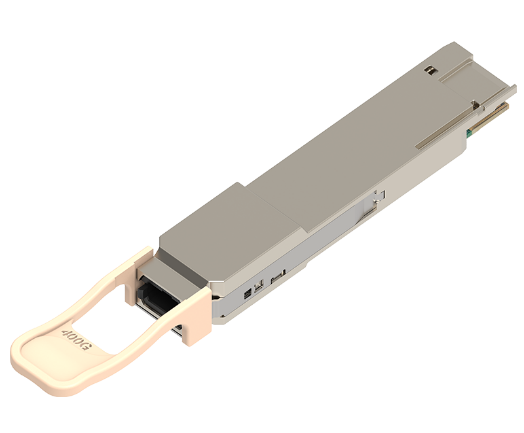
The 100G QSFP28 optical module refers to an optical module with a transmission rate of 100G. It commonly uses the QSFP28 package and typically operates at wavelengths of 850nm and 1310nm. It has four independent optical signal transceiver channels, each with a transmission rate of 25G. Depending on the category, 100G optical modules can be divided into 100G SR4, 100G LR4, 100G CWDM4, 100G ER4, and 100G PSM4. They can also be classified as single-mode or multi-mode optical modules based on the mode, and according to the transmission distance, they can be divided into 100m, 2km, 10km, 30km, and 40km.
The size of the 100G optical module is the same as the 40G optical module, but it carries a data transmission capacity of 100G. The 100G series products truly meet the high-density and high-speed requirements of data center equipment architecture. Currently, the technology of 100G optical modules is quite mature, but with the update of optical fiber network infrastructure and the demand for cost reduction of high-speed optical modules, there is still room for improvement. In the future, 100G optical modules will be as low-cost and low-risk as the current gigabit and 10-gigabit optical modules.
Working Principle
The working principle of the 100G optical module is similar to that of gigabit, 10-gigabit, and 40G optical modules, all of which complete the photoelectric conversion between optical fiber lines and equipment. The transmitting end converts electrical signals into optical signals, transmits them through optical fibers, and the receiving end converts optical signals back into electrical signals. The difference between the 100G optical module and the 1.25G and 10G optical modules is that the 100G optical module carries four signal channels, each with a rate of 25G, combining to 100G. Therefore, the 100G optical module’s rate capacity is ten times that of the 10G optical module. In the 100G single-mode optical module, the multiplexer combines the signals into one light beam, and the demultiplexer at the other end splits the light into four wavelengths. The difference between single-mode and multi-mode optical modules lies in whether multiplexing and demultiplexing (i.e., Mux and DMux) are required.
Product Parameters
- Compliant to IEEE 802.3 bm
- Compliant to SFF-8636
- Compliant to IEEE 802.3bm 100Gbase PSM4
- Compliant to IEEE 802.3ba and 100G CLR4/CWDM4
- Compliant to IEEE 802.3ba, IEEE 802.3bm and 100G LR4
- Compliant to IEEE 802.3ba, IEEE 802.3bm and 100G ER4
- OIF CEI-28G-VSR
- RoHS Compliant
Product Applications
As the optical industry develops with a focus on “100G network deployment,” the data center market for 100G optical modules is rapidly growing. 100G optical modules are widely used, commonly found in domestic data centers and backbone networks. With network upgrades and iterations, the application of 100G optical modules will become even more widespread. Due to the variety of speeds and interface types, the application scenarios for 100G optical modules are diverse. The 100G multi-mode module with an MPO interface and operating at an 850nm wavelength is generally used for short-distance transmission scenarios, achieving interconnection between internal network devices within a data center. The MPO interface of the 100G optical module can also link 100G network equipment with 25G equipment through MPO to four dual LC interface connections.
Q&A
Q、What is the difference between QSFP28 and 100G QSFP?
A、They are the same. The “QSFP” form factor was originally defined for <10G speeds. When it was adopted for 40G, the name became QSFP+ to denote the higher aggregate performance. The same “QSFP” form factor was later adopted for 100G but the electrical interface had to be upgraded to handle 25Gbps/lane. The electrical interface for 100G can handle up to 28Gbps, hence the engineering and industry name is QSFP28. Walsun refers to the 100G form factor as “100G QSFP” to avoid any confusion.
Q、Which 100G QSFPs are capable of supporting link distances over 10km?
A、The Walsun QSFP-100G-ZR4 supports link distances up to 80km. A minimum of 12dB attenuation is required to prevent permanent damage to the receiver – refer to the optics datasheet for optical specs. The QSFP-100G-ZR4 is supported on a limited set of platforms – refer to the Transceiver and Cable Guide for supported platforms.
The Walsun QSFP-100G-ERL4 supports link distances up to 40km when the forward error correction (FEC) is enabled on the host switch / router. In the default no-FEC mode, QSFP-100G-ERL4 supports a reach of up to 30km. A minimum of ~10dB attenuation is required to guarantee the receiver is not damaged. Please refer to the optics datasheet for optical specifications.
The QSFP-100G-LR4 supports links up to 10km over duplex single mode fiber. Enabling FEC with QSFP-100GLR4 optics on Walsun switches can allow for links beyond 10km with single mode fiber. However, as this is not fully characterized, customers are advised to measure the link distance and optical loss budget before deploying.
Q、What 100G Transceivers and Cables are available from Walsun?
A、Walsun supports a full range of 100G copper cables and optical transceivers compliant to IEEE standards and industry MSAs. Walsun’s 100G connectivity solutions include copper cables and Active Optical Cables (AOCs) to enable cost effective short reach options, as well as a wide range of optical transceivers in QSFP form factors for various fiber types, reach and interop requirements.
| Product Number | Product Description |
|---|---|
| QSFP 100G Transceivers for parallel Multi-mode Fiber (MMF) | |
| QSFP-100G-SR4 | 100GBASE-SR4 QSFP optical transceiver, up to 70m over parallel OM3 or 100m over OM4 multimode fiber |
| QSFP-100G-XSR4 | 100GBASE-XSR4 QSFP optical transceiver, up to 150m over parallel OM3 or 300m over OM4 multi-mode fiber |
| QSFP 100G Transceivers for duplex MMF | |
| QSFP-100G-SWDM4 | 100GBASE-SWDM4 QSFP optical transceiver, up to 70m over OM3 or 100m over OM4 duplex multi-mode fiber |
| QSFP-100G-SRBD | 100GBASE-BIDI QSFP optical transceiver, up to 70m over OM3 or 100m over OM4 duplex MMF |
| QSFP 100G Transceivers for Parallel Single-Mode Fiber (SMF) | |
| QSFP-100G-PSM4 | 100GBASE-PSM4 40G/100G dual speed QSFP optical transceiver, up to 500m over parallel SMF |
| QSFP-100G-PLRL4 | 100GBASE-PLRL4 40G/100G dual speed QSFP optical transceiver, up to 2km over parallel SMF |
| QSFP 100G Transceivers for duplex SMF | |
| QSFP-100G-CWDM4 | 100GBASE-CWDM4 QSFP optical transceiver, up to 2km over duplex SMF |
| QSFP-100G-XCWDM4 | 100GBASE-XCWDM4 QSFP optical transceiver, up to 10km over duplex SMF. Interop with 100GBASE-CWDM4 up to 2km. |
| QSFP-100G-LR4 | 100GBASE-LR4 QSFP optical transceiver, up to 10km over duplex SMF |
| QSFP-100G-LRL4 | 100GBASE-LRL4 QSFP optical transceiver, up to 2km over duplex SMF. Interop with 100GBASE-LR4 up to 2km. |
| QSFP-100G-ERL4 | 100GBASE-ERL4 QSFP optical transceiver, up to 40km over duplex SMF |
| QSFP-100G-ZR4 | 100GBASE-ZR4 QSFP optical transceiver, up to 80km over duplex SMF |
| QSFP-100G-DR | 100GBASE-DR “100G lambda” QSFP optical transceiver, up to 500m over duplex SMF. Interop with 100G-FR/LR over 500m. |
| QSFP-100G-FR | 100GBASE-FR “100G lambda” QSFP optical transceiver, up to 2km over duplex SMF. Interop with 100G-DR/LR over 500m/2km. |
| QSFP-100G-LR | 100GBASE-LR “100G lambda” QSFP optical transceiver, up to 10km over duplex SMF. Interop with 100G-DR/FR over 500m/2km. |
| 100G QSFP Active Optical Cables | |
| AOC-Q-Q-100G-xM | 100GbE QSFP to QSFP Active Optical Cable, 1m to 30m |
| 100G QSFP Twinax Copper Cables | |
| CAB-Q-Q-100G-xM | 100GBASE-CR4 QSFP to QSFP Twinax Copper Cable, 0.5m to 5m |
| CAB-Q-4S-100G-xM | 100GBASE-CR4 QSFP to 4 x 25GbE SFP Twinax Copper Cable, 1m to 5m |